How to Choose the Best Stuffed Soft Toys for Your Child?
When selecting the perfect stuffed soft toys for your child, it's essential to consider various factors. Data from the Toy Association indicates that in 2022, the plush toy market generated over $2 billion in sales in the U.S. alone. This demonstrates the popularity and significance of stuffed soft toys in child development.
Children often find comfort and companionship in these toys. According to a study from the American Academy of Pediatrics, such toys can support emotional growth and security. However, safety is paramount. Not all stuffed soft toys meet safety standards. Parents must be vigilant about materials used and potential choking hazards.
Choosing the right toy is more than just a decision; it's an investment in your child's happiness and well-being. Reflect on where the toys are made and the reputation of the brand. Some companies take safety seriously, while others might not meet essential standards. Thus, understanding these nuances is vital in making an informed choice.
Understanding the Benefits of Stuffed Soft Toys for Children
Stuffed soft toys offer numerous benefits for children. They provide comfort and security, especially during tough times. A child often feels safe when they hug their favorite toy. These toys can also serve as a transitional object, helping kids adjust from home to school or other environments.
Playing with stuffed animals enhances a child's imagination. Kids create stories and scenarios in which their toys play pivotal roles. This imaginative play fosters creativity. It can even help develop problem-solving skills. Children learn to express emotions through these interactions, promoting emotional intelligence.
Moreover, stuffed toys can teach empathy. When a child cares for their toy, they practice compassion. They learn to understand others' feelings, which is essential in social situations. However, not all toys promote these benefits equally. Choosing the right stuffed animal requires thought and attention. Opt for high-quality materials and safe designs. It’s essential to reflect on what each child might benefit from the most.
Key Factors to Consider When Choosing Stuffed Soft Toys
When choosing stuffed soft toys for children, several key factors should be considered. Safety is paramount. According to a report from the American Society for Testing and Materials, nearly 80% of soft toys are recalled due to safety issues. Parents should opt for toys that meet safety standards. Look for labels indicating that toys are free from harmful materials. These dimensions are critical when selecting a safe toy.
Age appropriateness is another essential factor. Toys should match the child's developmental stage. For instance, infants enjoy cuddling soft toys that are small and lightweight. In contrast, older children may prefer plush toys that can withstand rough play. Research shows that age-appropriate toys enhance a child's cognitive and emotional development. Parents should regularly assess their child's interests and preferences when selecting new stuffed toys.
Durability can be a concern. Many stuffed toys are prone to wear and tear, especially with daily use. A study from the Toy Association found that over 50% of parents report their child's toys have noticeable damage within six months. This indicates that quality is crucial. Parents should look for well-constructed toys that can endure rough handling. Additionally, consider toys that are machine washable. This ensures that hygiene standards are met while extending the toy's life.
Evaluating Safety Standards and Materials for Toys
When choosing stuffed soft toys for children, safety should be your top priority. One critical aspect is the materials used. Look for toys made from non-toxic fabrics. Pay attention to labels that indicate safety standards. Toys free from harmful chemicals are essential for your child's health. Be wary of toys that have small parts, which can pose choking hazards.
Tips: Always check for the ASTM or EN71 certification on toys. These certifications ensure rigorous safety testing. Additionally, inspect seams and attachments. Weak stitching can lead to breakage, exposing dangerous fillings. Carefully read product reviews from other parents for firsthand accounts.
Another factor to consider is how toys can be cleaned. Choose fabrics that are machine washable. This helps maintain hygiene, especially for toys that end up in your child's mouth. Looser seams may fray and trap dirt, making the toy unsafe. Regular washing will keep the plush friend fresh and your child healthy.
Choosing the Right Size and Design for Different Ages
Selecting the right size and design for stuffed soft toys is crucial for your child’s development. Babies and toddlers benefit from smaller, lightweight toys. These are easy for tiny hands to grasp. Consider plush toys with varied textures. This sensory stimulation can enhance their tactile awareness.
As kids grow, their interests evolve. For younger children, opt for animals or characters from their favorite stories. The more relatable the design, the more they will bond with it. Older kids may prefer themes like fantasy or adventure. Size becomes important here. A larger toy can serve as a comforting companion during sleep.
However, not all plush toys are created equal. Some might be too bulky, posing a risk during play. Others may lack quality materials, resulting in quick wear. Regular inspection of the toy’s condition is essential. Look for any loose parts that may present choking hazards. Always consider your child's personal preferences and play habits while choosing. Each child is unique, and what works for one may not be ideal for another.
How to Choose the Best Stuffed Soft Toys for Your Child? - Choosing the Right Size and Design for Different Ages
| Age Group |
Recommended Size |
Design Features |
Safety Considerations |
| 0-1 year |
Small (12-15 inches) |
Soft, lightweight, no small parts |
Certified hypoallergenic materials |
| 1-3 years |
Medium (15-20 inches) |
Colorful, interactive elements |
Non-toxic stuffing and fabrics |
| 3-5 years |
Large (20-25 inches) |
Characters from favorite shows |
Durable, machine-washable materials |
| 5+ years |
Extra Large (25+ inches) |
Collectible designs, themed collections |
Meets safety standards for older kids |
Maintenance and Care Tips for Stuffed Soft Toys
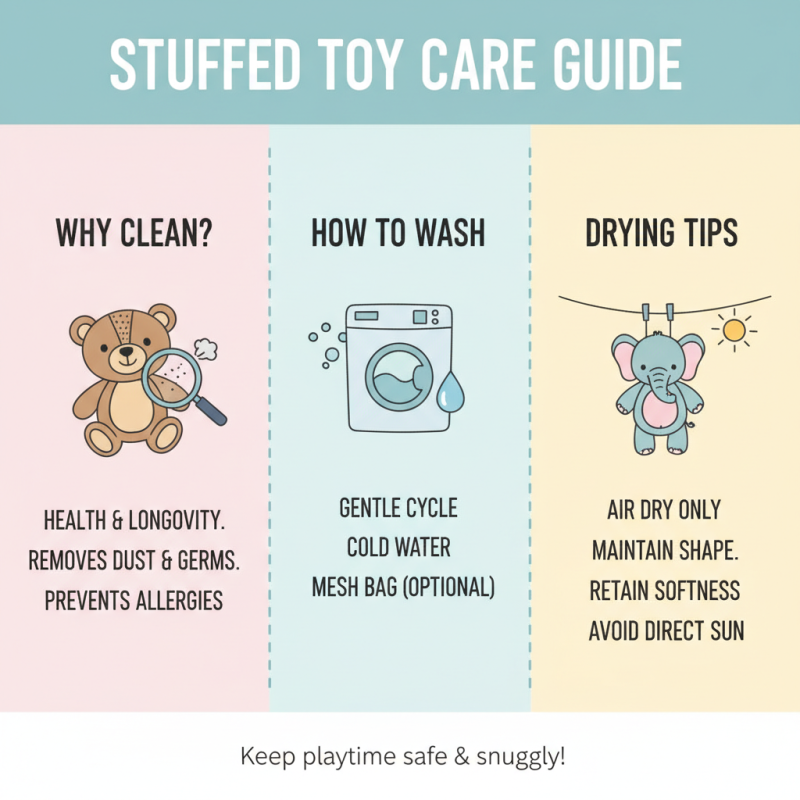
Caring for stuffed soft toys is crucial for their longevity and your child's health. Regular cleaning helps eliminate dust mites and allergens. According to a survey by the American Academy of Pediatrics, plush toys can harbor bacteria if not cleaned routinely. Washing instructions typically recommend using a gentle cycle and cold water. Air drying is preferable to maintain the toy's shape and softness.
Inspect toys regularly for wear and tear. Broken seams or loose parts can pose hazards. The Consumer Product Safety Commission emphasizes checking for safety compliance, especially in toys for younger children. Repairing toys can be simple, using needle and thread for minor fixes. If a stuffed toy is beyond repair, consider recycling options.
Storage is another vital aspect. Keep soft toys in a clean, dry area to prevent mold growth. A toy box lined with an easy-to-clean material helps maintain hygiene. Encourage your child to tidy up their toys. Developing responsibility for their belongings is a lasting lesson. Soft toys can feel loved, but they require attention. Regular maintenance ensures they remain a cherished part of childhood.