2026 Best Large Plush Toy Suppliers for Global Buyers
The global Large Plush Toy market is expanding, but supplier selection requires more than attractive photographs and low quotations. Grand View Research reports continued growth in the broader plush toys market, supported by gifting, licensed characters, home décor, and children’s emotional comfort products. Fortune Business Insights also identifies rising online retail and character-based merchandise as important market drivers. However, these reports group different product sizes and categories together. Large Plush Toy demand can therefore be overstated.
A useful expert perspective comes from Jim Silver, a longtime toy-industry analyst and founder of TTPM: “Toys are the tools of childhood.” His statement reflects an important purchasing reality. A 90-centimeter teddy bear is not only a decorative item. It may become a child’s bedtime companion, a hotel display, or a promotional centerpiece. Stitching, filling recovery, fabric softness, odor control, and packaging compression all matter.
This guide evaluates 2026 suppliers through practical buyer concerns. It considers factory experience, product development, customization, inspection procedures, production capacity, communication, and export readiness. Safety documentation deserves close attention. Materials should be traceable, test reports should match the finished product, and labels should suit the destination market. Not every supplier with impressive samples will deliver consistent bulk quality. That is the uncomfortable part.
Buyers should compare physical samples, not promises alone. A plush toy that arrives flattened, sheds fibers, or loses shape can damage a brand quickly. The best Large Plush Toy suppliers combine creative design with repeatable manufacturing. Some weaknesses may remain. Good sourcing means identifying them before payment, not after delivery.
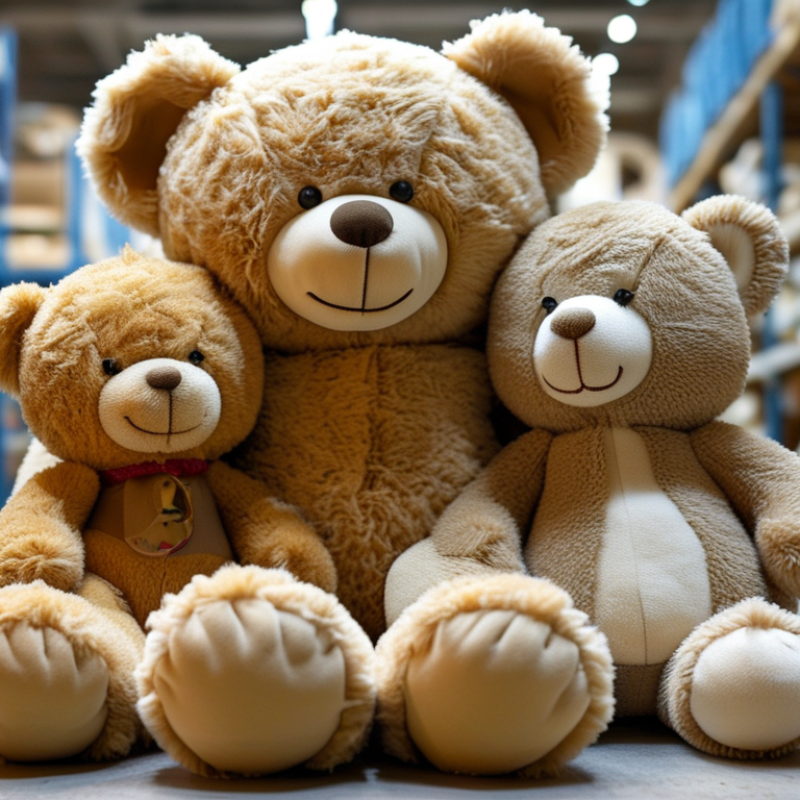
What Defines a Reliable Large Plush Toy Supplier in 2026
2026 Best Large Plush Toy Suppliers for Global Buyers
What Defines a Reliable Large Plush Toy Supplier in 2026
Reliable large plush toy suppliers must prove more than production capacity. Grand View Research estimates the global stuffed and plush toys market will continue growing through 2030. This growth increases pressure on factories, materials, and delivery schedules. A dependable supplier should provide recent test reports, material specifications, and batch-level traceability. Buyers should check fabric composition, filling density, stitching strength, and colorfastness. For children’s products, documented testing against applicable ASTM, EN 71, or ISO 8124 requirements is essential.
Physical samples reveal details that spreadsheets often hide. Check whether a 90-centimeter plush toy keeps its shape after repeated compression. Inspect seams around ears, paws, and embroidered features. Ask for a written inspection plan, production photos, and a corrective-action record. A factory that explains defects openly may be more trustworthy than one promising zero defects. No checklist is perfect.
Circana’s industry reporting showed a decline in global toy sales during 2023, making inventory control more important for international buyers. Suppliers should offer realistic minimum order quantities, clear sampling timelines, and contingency plans for fabric shortages. Their export team should explain carton dimensions, loading methods, and lead-time risks. Price still matters. However, an unusually low quote may hide thinner fabric, weaker stitching, or missing tests. Independent pre-shipment inspections add confidence, though they cannot replace supplier transparency.
2026 Best Large Plush Toy Suppliers for Global Buyers
What Defines a Reliable Large Plush Toy Supplier in 2026
Reliable large plush toy suppliers should demonstrate verified safety compliance, consistent quality control, transparent material documentation, production capacity, and dependable delivery performance. The chart uses a practical buyer evaluation model in which each criterion is scored from 0 to 100 during supplier qualification.
Compliance factors reflect commonly required frameworks for global children’s products, including ASTM F963, CPSIA, EN 71, and REACH. Scores are evaluation benchmarks rather than company or brand data.
How to Compare Product Quality, Safety, and Customization Options
When comparing large plush toy suppliers, inspect more than photos. Ask for a physical sample with the proposed fabric, filling, stitching, and accessories. Check seam strength by gently pulling stress points, especially around ears, paws, and zippers. The toy should feel balanced, with firm but soft filling and no sharp internal parts. I once found uneven stuffing hidden beneath attractive packaging. Small defects become expensive during bulk production.
Safety evidence should match your target market and product age range. Request recent, independent test reports covering materials, dyes, small detachable parts, flammability, and mechanical strength. Confirm that the report applies to the exact sample, not a similar model. Ask how the supplier controls batch consistency. A reliable factory can explain its inspection records, corrective actions, and final packing checks clearly. Vague answers deserve caution.
Tips: Create a comparison sheet. Record fabric weight, filling type, test dates, minimum order quantity, lead time, and defect tolerance. For customization, request a color card, embroidery proof, size drawing, and pre-production sample. Confirm washable labels, packaging dimensions, and artwork ownership in writing. Do not approve from digital images alone. Colors may shift. Embroidery can look different at full scale. Allow time for one revision, because perfect samples rarely appear on the first attempt.
Which Manufacturing and Sourcing Regions Serve Global Buyers Best
For global buyers, the best plush toy region is rarely the cheapest. It is the region that balances capacity, materials, quality control, and shipping reliability. China remains a strong sourcing base for oversized plush toys. Its manufacturing clusters offer cutting, stuffing, embroidery, packaging, and sampling services in one supply network. Buyers can compare several factories quickly. However, quality may vary between workshops, so factory audits and production samples remain essential.
Vietnam serves buyers seeking diversified production and competitive labor costs. Its suppliers often handle medium and large orders, while improving export packaging and production planning. India offers useful options for handmade details, cotton fabrics, and distinctive surface textures. Turkey and parts of Eastern Europe can support buyers closer to European distribution centers. Their shorter inland routes may reduce replenishment time, although production capacity can be less consistent.
A reliable sourcing process checks fabric composition, seam strength, stuffing density, and metal-free decoration. Large plush toys also need careful carton design because empty space can inflate freight charges. Ask suppliers for pre-production samples, batch inspection records, and age-grade testing documents. Details matter. In practice, I would not choose a region from a spreadsheet alone. A promising factory may still miss color consistency or deliver late during peak seasons. Small pilot orders reveal those weaknesses before a major commitment. Oversized designs need early freight testing, because a soft toy can become expensive when its carton is poorly planned.
What International Buyers Should Check Before Placing an Order
2026 Best Large Plush Toy Suppliers for Global Buyers
What International Buyers Should Check Before Placing an Order
Large plush toys require more than attractive photos and a low quotation. Grand View Research valued the global stuffed toy market at approximately USD 8 billion in 2023, with continued growth expected through 2030. That growth attracts new factories, but not every supplier has stable production controls.
Ask for recent factory audit records, production photos, and a clear material specification sheet. Confirm the filling composition, fabric weight, stitching method, and maximum size tolerance. A 120-centimeter plush toy may look impressive, yet weak seams can fail during carton handling. Request a pre-production sample, not only a digital rendering.
Check testing against the destination market’s requirements. Relevant references may include EN 71, ASTM F963, and ISO 8124, depending on the sales region. Independent laboratory reports should match the exact product, materials, and age grading. Generic certificates are not enough. The 2024 Toy Association market fact sheet reported U.S. toy sales of about USD 28.6 billion in 2023, showing the scale of this industry and its quality expectations.
Review carton dimensions, compression protection, and shipping terms before ordering. Large plush products often lose margin through oversized freight. Ask whether the supplier can provide inspection photos before loading. I have seen attractive samples hide inconsistent embroidery. A second inspection is wiser. Still, no checklist catches everything; buyer assumptions can remain the weakest control.